
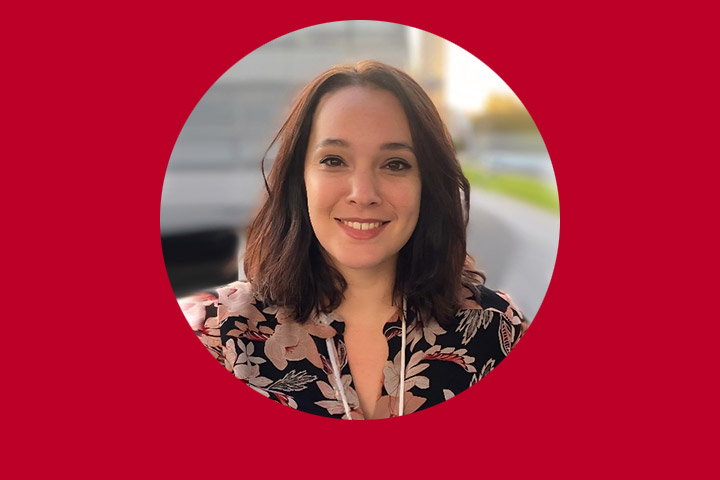
Women’s Voices: Sarah Mountadem
This month in Women’s Voices, Sara Carracedo has interviewed Sarah Mountadem. Until December 2025, she was a postdoctoral fellow under the supervision of Aude Panatier at Neurocentre Magendie. In this interview, she reflects on her scientific journey and discusses with us about female mentorship and leadership in academia.
Sara Carracedo: Could you share your academic path with us?
 Sarah Mountadem: I have a fairly traditional academic background. I have always been deeply fascinated by the brain and its mysteries. My initial goal was to become a neurosurgeon. Despite failing my first year of medical school, I never lost my interest in neuroscience and decided to pursue biology instead, aiming to become a neurobiologist.
I began with an Associate’s degree in Biological Engineering at Clermont-Ferrand, which included a specialization in Animal Physiology. It was really at that point that I realized I wanted to focus on fundamental research. I then continued with a Bachelor’s degree in Pharmacology followed by a Master’s in Pharmacology and Neurosciences.
Although I initially doubted my ability to undertake a PhD, the support and encouragement of my internship supervisors motivated me to apply to the doctoral school. As a result, I not only obtained a ministerial scholarship but also secured first place in the entrance exam, demonstrating that it is possible to succeed even when you don’t fully believe in yourself at the start.
I subsequently joined the Neuro-Dol team, focused on trigeminal pain and migraine, led by Professor Radhouane Dallel in Clermont-Ferrand. There, I studied the role of astrocytic Kir4.1 channels in chronic pain. This experience was a revelation, as it was then that I developed my interest in glial cells. After completing my thesis, I worked for six months as a research engineer in the same laboratory to finalize my thesis paper.
Finally, from June 2021 until December 2025, I had pursed my first postdoctoral position in Dr. Stéphane Oliet’s laboratory at the Neurocentre Magendie, Bordeaux Neurocampus under the supervision of Dr Aude Panatier.
Why did you decide to move to Bordeaux for your postdoc? What is your current research focus?
During the final year of my PhD, I struggled with motivation to look for a postdoctoral position, likely due to accumulated fatigue. What I found most difficult, however, was the prospect of moving away alone while leaving my partner in another city. Fortunately, Aude Panatier was a member of my thesis committee. After my defense, she offered me the opportunity to join her team, a valuable chance that allowed me to balance personal distance with the scientific excellence of the research conducted in Bordeaux, particularly on neuron-glia interactions. I had lead a project aimed at studying the role of astrocytic mGluR5 receptors in synaptic transmission, synaptic plasticity, and memory.
Do you perceive that we, as women, have different ways of supervision or leadership styles compared to men? What type of supervision has been most beneficial to you?
I believe that supervision styles are more influenced by individual personality than by gender, but certain patterns can still be observed. I’ve noticed that women, perhaps because they often feel additional pressure to prove themselves in environments where inequalities still exist, tend to adopt a very engaged, demanding, yet deeply supportive style of supervision. There’s often a strong desire to ‘live up to expectations’ on every front, which can translate into great attentiveness, rigor, and care for younger researchers. Personally, I’ve benefited the most from supervision rooted in trust, encouragement, and open communication, regardless of whether it came from women or men. I don’t like being overly monitored or closely supervised; instead, I prefer to be trusted and to have my ideas and reflections considered. Above all, this allows me to be recognized and valued as a researcher rather than just a student.
In your view, how does mentorship style affect the professional growth of women? Do you believe there are implicit biases that affect how women are mentored or evaluated in academia?
Mentorship style plays a crucial role in the professional development of women by fostering confidence and creating opportunities. Although implicit biases persist, I have personally felt somewhat insulated from their impact. Throughout my academic journey, I have been fortunate to encounter male mentors who have consistently provided support and guidance, remaining steadfast in helping me build my future. For instance, my PhD supervisor, continually placed trust in me and contributed significantly to my growth. These people have supported me, and continue to do so, in establishing my academic credentials and shaping my career trajectory. Consequently, I have not personally experienced disparities in recognition based on gender. Nonetheless, it remains imperative to address such biases to ensure equitable mentorship for all.
What advice would you offer to early-career female scientists who are facing systemic challenges while trying to pursue their professional goals?
My advice to early-career female scientists facing systemic challenges is to build a strong support network, including mentors and peers who believe in you and your potential. Seek out opportunities to develop your skills and voice your ideas confidently, your perspective is valuable. Don’t hesitate to advocate for yourself and set boundaries that protect your well-being. Remember that setbacks are often part of the journey, but resilience and persistence are key.
About Sara Carracedo
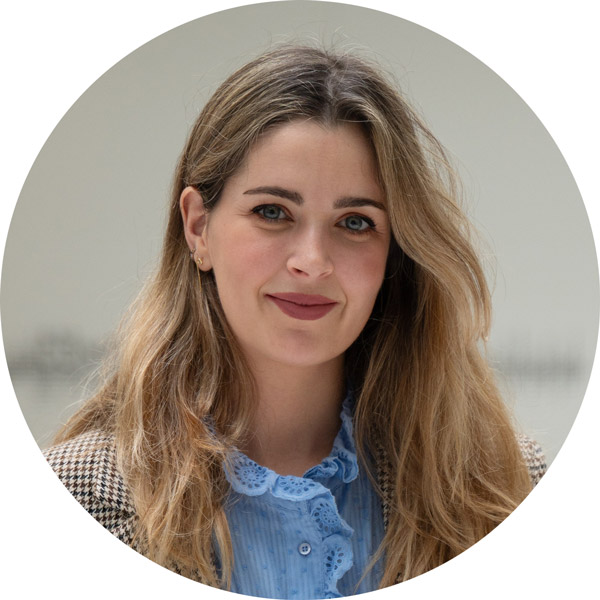 Sara Carracedo completed both her PhD and postdoctoral research in the team of Éric Boué-Grabot and Marc Landry at the IMN, where she studied the neuroimmune role of the P2X4 receptor in Amyotrophic Lateral Sclerosis (ALS).
During the first year of her PhD, she co-founded the Brainstorm Student Journal with Juan García-Ruiz, a student-led journal dedicated to promoting science communication at the Bordeaux Neurocampus. In 2024, in collaboration with the Neurocampus Parity and Inclusion Committee (NeuroPIC), she launched Women’s Voices, an initiative aimed at increasing the visibility of early-career female researchers and promoting gender equality in science.
She is currently Project Lead in Immunotherapies at BioAZ, a veterinary biotech startup, where she coordinates R&D programs for the development of VHH-based immunotherapies dedicated to improving animal welfare.
About Women’s Voices
Women’s Voices is an interview published in Brainstorm and on Neurocampus’ website created in partnership with the Neurocampus Parity and Inclusion Committee (NeuroPIC) a local group committed to promoting equality and organizing actions to close the gap between women and men in academia. The goal of this section is to increase the visibility of early career female researchers at the Bordeaux Neurocampus of the University of Bordeaux. We interview researchers about their scientific contributions, insights and opinions about equity, diversity and gender bias in academia. Through these interviews, we aim not only to highlight their achievements but also to serve as inspiration for our scientific community and other female scientists.
Last update 23/02/26