
Sandrine Pouvreau laureate of the Fulbright France program
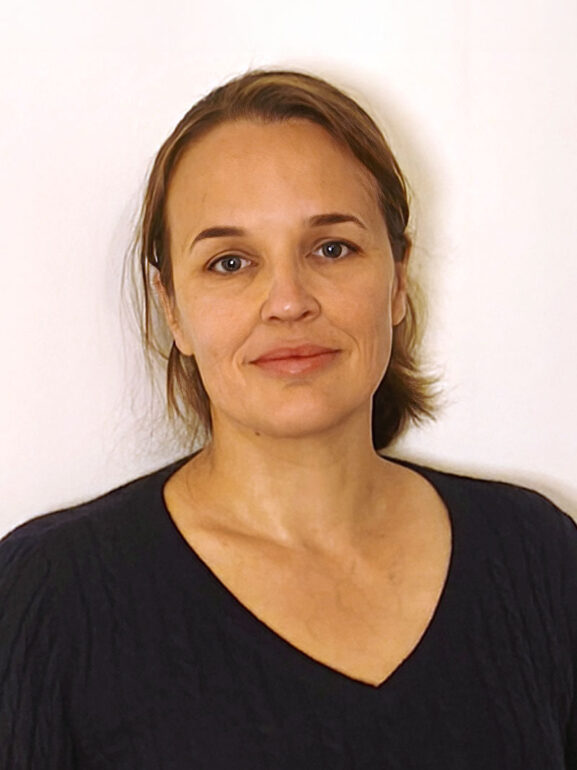
Sandrine Pouvreau is a CNRS researcher on Giovanni Marsicano’s team at the Neurocentre Magendie. She has just been awarded a Fulbright fellowship that will allow her to spend six months in Philadelphia developing a collaborative project. In this interview, she describes in detail what she is investigating deep within our brains, and how this fellowship will enable her to turn a hypothesis into experiments.
Could you tell us about the specificity of your research?
I was trained as a biophysicist. Since my PhD, I have worked on the organelle networks involved in calcium signaling, particularly the endoplasmic reticulum, the cell’s main intracellular calcium store, and mitochondria, multifunctional organelles that produce the cell’s energy and regulate the calcium signal.
Calcium is a universal messenger: it drives cardiac and skeletal muscle contraction, synaptic transmission, and signal integration in astrocytes. Calcium signal is regulated by the internal architecture of the cell and interactions with other signaling pathways, reactive oxygen species, or ROS, signaling for instance.
ROS were long seen as purely harmful: the well-known oxidative stress found in many diseases and in aging. But a parallel hypothesis has gained ground in recent years: that they also constitute a signaling pathway on their own. For that, though, the message has to be targeted. ROS are not a single molecule but a family with widely varying reactivity, and with it, range of action: from a few nanometers for the most aggressive species to a few micrometers for the more stable ones. That is the very scale of the cell’s internal architecture: what gets oxidized depends on what happens to be nearby, and ultrastructure becomes decisive.
I was recruited to the CNRS on a project studying precisely these calcium-ROS interactions in skeletal muscle, at the endoplasmic reticulum–mitochondria interface, where these two organelle networks form signaling hubs. I demonstrated that mitochondria behave as a network in the muscle: functionally heterogeneous, they are nonetheless not independent. The activity of some depends on that of others, and integration occurs at the scale of the network.
Fifteen years ago, I brought this idea into the central nervous system. These intracellular networks, and their calcium-ROS coupling, were less studied there than in muscle, where their direct role in contraction had brought them to light very early on. Neuroscience thinks in terms of cellular networks, of neurons and astrocytes. But information integration also happens, in part, inside the cells themselves, where organelles shape the calcium signal. These organelles form a network of their own: that is the missing level of analysis.
Why did you apply to the Fulbright France program?
Scientifically, the idea is ripe: what is missing are the molecular tools to test it. Observing the calcium-ROS coupling at the scale where it actually occurs, that of the nanodomains at reticulum–mitochondria interface, requires redox probes targeted to these interfaces and ways to generate spatially restricted ROS. These tools exist in only a handful of laboratories worldwide, inseparable from the expertise that makes them interpretable. Dr. Hajnóczky’s laboratory, at MitoCare, is one of them. The Fulbright funding arrives at exactly the moment the project is ready to launch, giving me six months to begin developing it.
Beyond this scientific rationale, I was drawn to what the program has stood for since its creation in 1946: the idea that knowledge has to be shared between nations. My project embodies this concretely: I am going to seek rare expertise, and in return I bring my own tools for tissue imaging in living preparations, which are absent from the host laboratory.
What research project will you be developing?
My hypothesis is that calcium-ROS coupling at organelle interfaces constitutes an additional integration mechanism in astrocytes and neurons: a local calcium signal would trigger ROS production, which in turn would modulate calcium-signaling proteins, creating loops capable of amplifying and propagating weak signals.
This type of coupling is now established in structurally repetitive cells such as skeletal muscle. Central nervous system cells are the opposite: a complex architecture, where synaptic inputs arrive at multiple points distributed in space and time. That is what makes the question difficult, and what makes it interesting. If architecture is decisive, then integration cannot be uniform: it varies from one cellular domain to another, with the local morphology of the organelle network. These networks also remodel in response to activity, environment, or disease: each a research direction that will open up once the basic mechanisms are understood.
During the six months in Philadelphia, the objective is well defined: implement these probes, first in standard cell lines, then in neurons and astrocytes, and obtain a first demonstration of the coupling in living cells, using the genetic tools needed to establish causality. The next step will come on my return: validating these mechanisms in tissue, in organotypic and acute slices, using my own 3D imaging tools. This is neither an American parenthesis nor a complete program to be carried out in six months: it is the starting point.
What do you think this program will bring you, both professionally and personally?
Professionally, this stay turns a hypothesis I’ve carried for years into an experimental program, built alongside a laboratory I’ve followed closely for a long time. And it won’t stop at my own bench. The national working group “Imaging Mitochondria,” which I co-built and now co-lead, brings together some forty researchers and engineers and will be the natural channel for sharing what I bring back.
Personally, this program connects me with other Fulbright grantees from remarkably diverse backgrounds, a kind of exchange I rarely get in the day-to-day of a single lab. Philadelphia is also a city I’ve never explored, rich in history and well placed to see more of the East Coast. Discovering it, and sharing that discovery with my children, is part of what this stay means to me.
About Fulbright
Created in 1946 at the proposal of the eponymous US senator, Fulbright is an international academic mobility program of the US government. The aim of the program is to promote educational and cultural exchanges between France and the United States.
Last update 22/07/26