
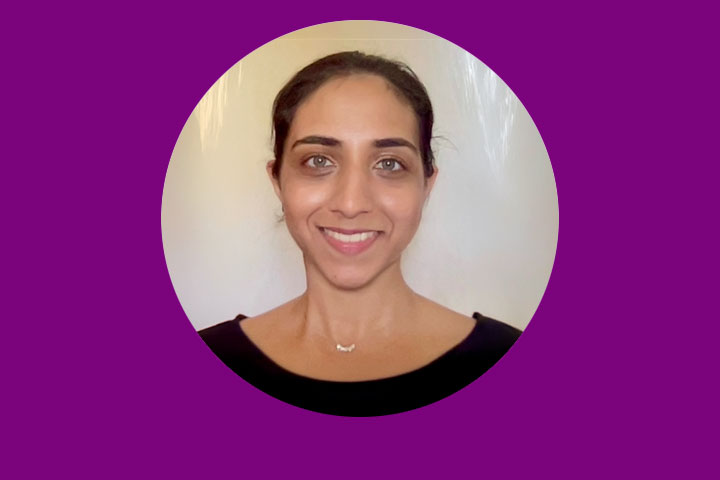
Women’s Voices: Aliya Seelarbokus
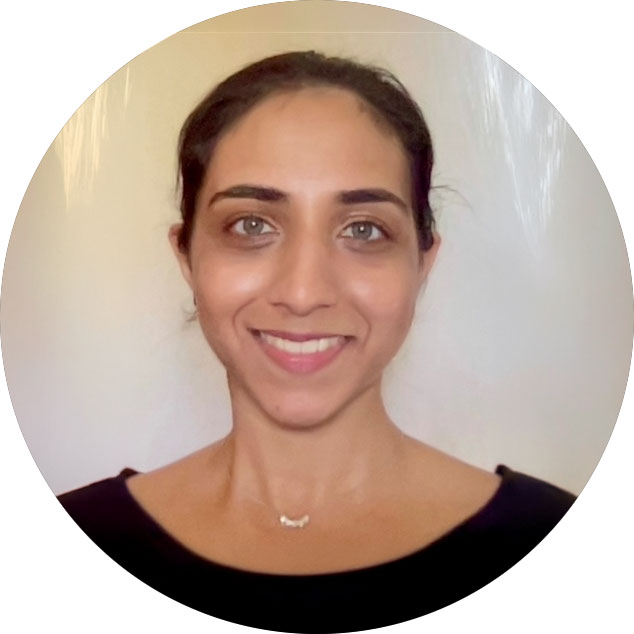 This month in Women’s Voices, we interview Aliya Seelarbokus, a second year PhD student from Mauritius, working on addictive-like eating in patients with stroke and obesity at INCIA. In this interview she discusses her perspective on gender in the scientific work field across different countries, and the opportunities and challenges offered to international students in Europe.
Sara Carracedo: Could you tell us a bit about your academic journey and what led you to work in neuroscience?
Aliya Seelarbokus: My academic journey began in Mauritius, my home country. After completing high school in 2017, I moved to the United Kingdom (UK) to begin my Bachelor of Science (BSc) in Food and Human Nutrition, with no idea at all of one day integrating into the neuroscience field! During my second year at Newcastle University, I took a special liking to the role of the Mediterranean diet in the onset and progression of dementia and was particularly interested in healthy ageing. Owing to my genuine interest and curiosity for emerging research studies around this topic, I secured a 1-year contract as a Research Assistant at the Human Nutrition and Exercise Research Centre at Newcastle University. This first position allowed me to build on the knowledge I had accrued over my first two years of study and increased my eagerness to follow an academic career pathway in the field of nutrition and neuroscience. In 2022, I pursued my Master’s in Clinical and Public Health Nutrition at University College London (UCL) and I had the opportunity to publish my first systematic review examining the role of the Mediterranean diet among patients with Parkinson’s disease. As I knew I had to pursue a PhD to meet my career goals, I explored PhD opportunities in France due to family commitments and was very fortunate to have been selected by the Bordeaux Neurocampus International PhD Program! Currently, I am working on food addiction and addictive-like eating behaviours among patients with stroke and obesity.
You’ve worked in several countries, including the UK and France. What have you learned from navigating different academic systems across Europe? ?
When leaving the UK last year, I had mixed feelings as I was so well-settled in Britain’s education system, but I was also very excited to discover a new country, a different academic system and culture! The transition from the UK to France has been fairly smooth as I realised that we are all connected through research, especially during a PhD where we are always looking out for collaborations with international universities. All of my PhD work is conducted in English and therefore there were no issues with the language, although it helped that I already knew French. I think that the key differences between both education systems are primarily during the Bachelor’s and Master’s years as the duration of the studies in the UK and France are slightly different. For example, in the UK, my BSc lasted for 4 years (with a professional year included) while my MSc was for a single year. In France, I understood that a BSc (or equivalent) is usually 3 years and typical Master’s may be up to 2 years. However, both education systems converge to the same end point – where the PhD would be fairly similar across Europe as we collaborate internationally through mobility, conferences, and publication teams.
How has mobility shaped your perspective on gender and inclusion in science?
If we consider the latest 2025 report of the French higher education and research ministry, we still note that more than half of the doctoral graduates are men and their work conditions are said to be better than for women. However, on a personal note, I have not faced any difficulties regarding my inclusion in science up to now, neither in the UK, nor in France. In my lab, I strongly believe that women are given opportunities, and we are all equally supported, irrespective of our gender. Therefore, I hope that there would not be any issues which would crop up as I pursue my academic journey.
Have you faced any administrative or institutional barriers due to your international status? What could European institutions do better to support researchers from abroad?
No, there were no major barriers faced due to my international status. In fact, when I was at UCL, more than half of my classmates were international students and we were highly supported. However, once you’ve completed your studies in the UK, we have 2 years to stay under a work visa. After these 2 years, it is relatively hard to find a job and a sponsorship in the UK as an international applicant.
In Europe, depending on the country you are applying to, there are some PhDs which primarily target home students, and overseas students need to pay for the outstanding fees, which are very expensive. However, I have been greatly supported by the International Neurocampus Graduate Program at the University of Bordeaux, as this program specifically targets and privileges applicants from abroad. Having specific programs both for home and international applicants does help to maximise opportunities for all.
What would you say to other female scientists considering mobility as part of their career?
Be ready to take the challenge with unwavering commitment in the pursuit of your goals! Mobility should be seen as an exciting opportunity, and everyone should be given the chances as it helps you grow both professionally and personally!
About Sara Carracedo
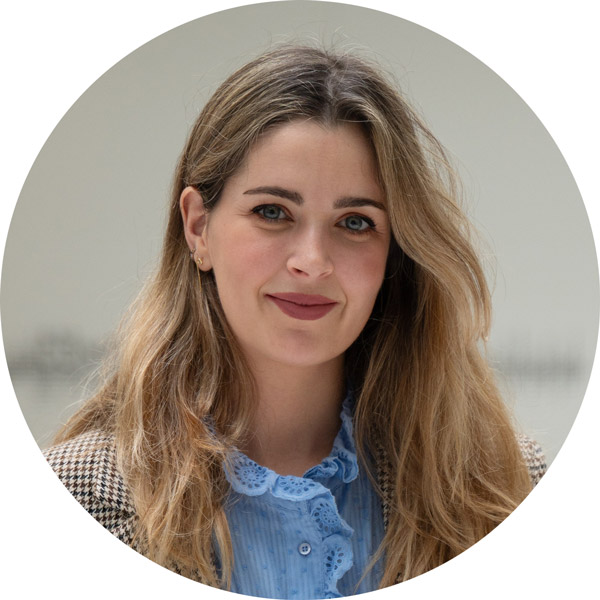 Sara Carracedo completed both her PhD and postdoctoral research in the team of Éric Boué-Grabot and Marc Landry at the IMN, where she studied the neuroimmune role of the P2X4 receptor in Amyotrophic Lateral Sclerosis (ALS).
During the first year of her PhD, she co-founded the Brainstorm Student Journal with Juan García-Ruiz, a student-led journal dedicated to promoting science communication at the Bordeaux Neurocampus. In 2024, in collaboration with the Neurocampus Parity and Inclusion Committee (NeuroPIC), she launched Women’s Voices, an initiative aimed at increasing the visibility of early-career female researchers and promoting gender equality in science.
She is currently Project Lead in Immunotherapies at BioAZ, a veterinary biotech startup, where she coordinates R&D programs for the development of VHH-based immunotherapies dedicated to improving animal welfare.
About Women’s Voices
Women’s Voices is an interview published in Brainstorm and on Neurocampus’ website created in partnership with the Neurocampus Parity and Inclusion Committee (NeuroPIC) a local group committed to promoting equality and organizing actions to close the gap between women and men in academia. The goal of this section is to increase the visibility of early career female researchers at the Bordeaux Neurocampus of the University of Bordeaux. We interview researchers about their scientific contributions, insights and opinions about equity, diversity and gender bias in academia. Through these interviews, we aim not only to highlight their achievements but also to serve as inspiration for our scientific community and other female scientists.
Last update 24/06/26