
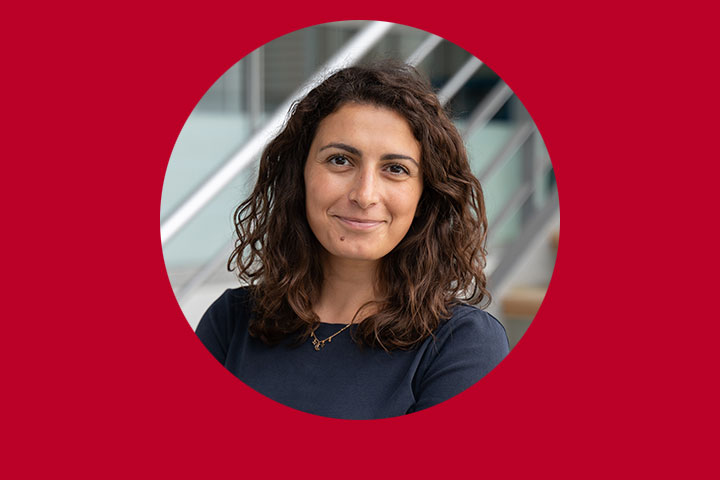
Ourania Semelidou wins the 2026 Marian Diamond Prize
Ourania Semelidou, a post-doctoral researcher at the Neurocentre Magendie in Andreas Frick’s team, is the winner of the Marian Diamond Prize 2026, in recognition of her research work and her involvement in the scientific community.
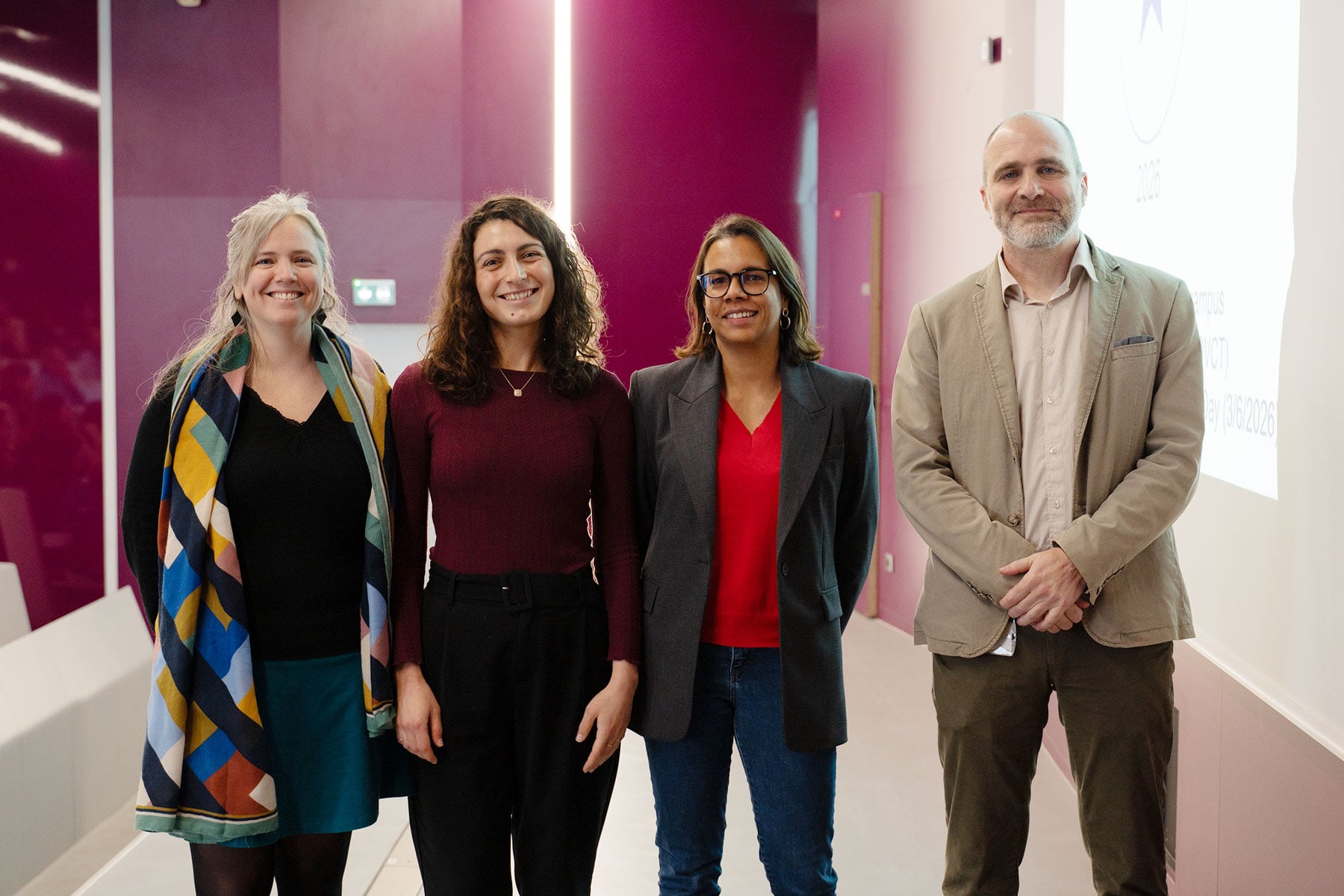
She was presented with the award on Friday 6 February 2016, during a special event organised as part of the annual Women and Girls in Science Day on 11 February. She received the award from Christelle Glangetas, last year’s laureate, and Mathieu Wolff, deputy director of Bordeaux Neurocampus
Initiated by the Bordeaux Neurocampus Parity and Inclusion Committee (NeuroPIC), the Marian Diamond Prize aims to highlight women neuroscientists at a crucial stage in their careers, the post-doctoral period, when they face many obstacles in gaining access to academic positions.
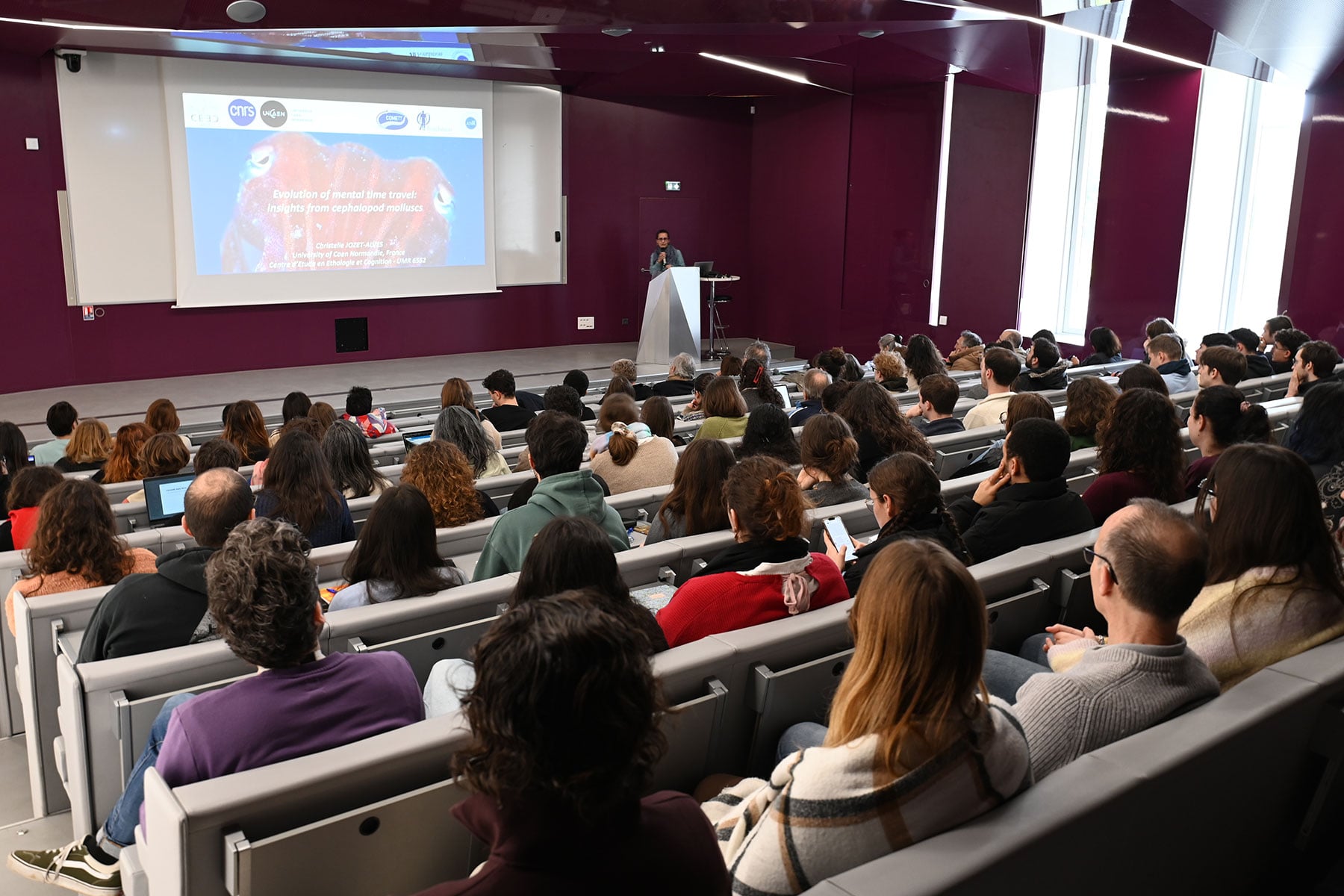
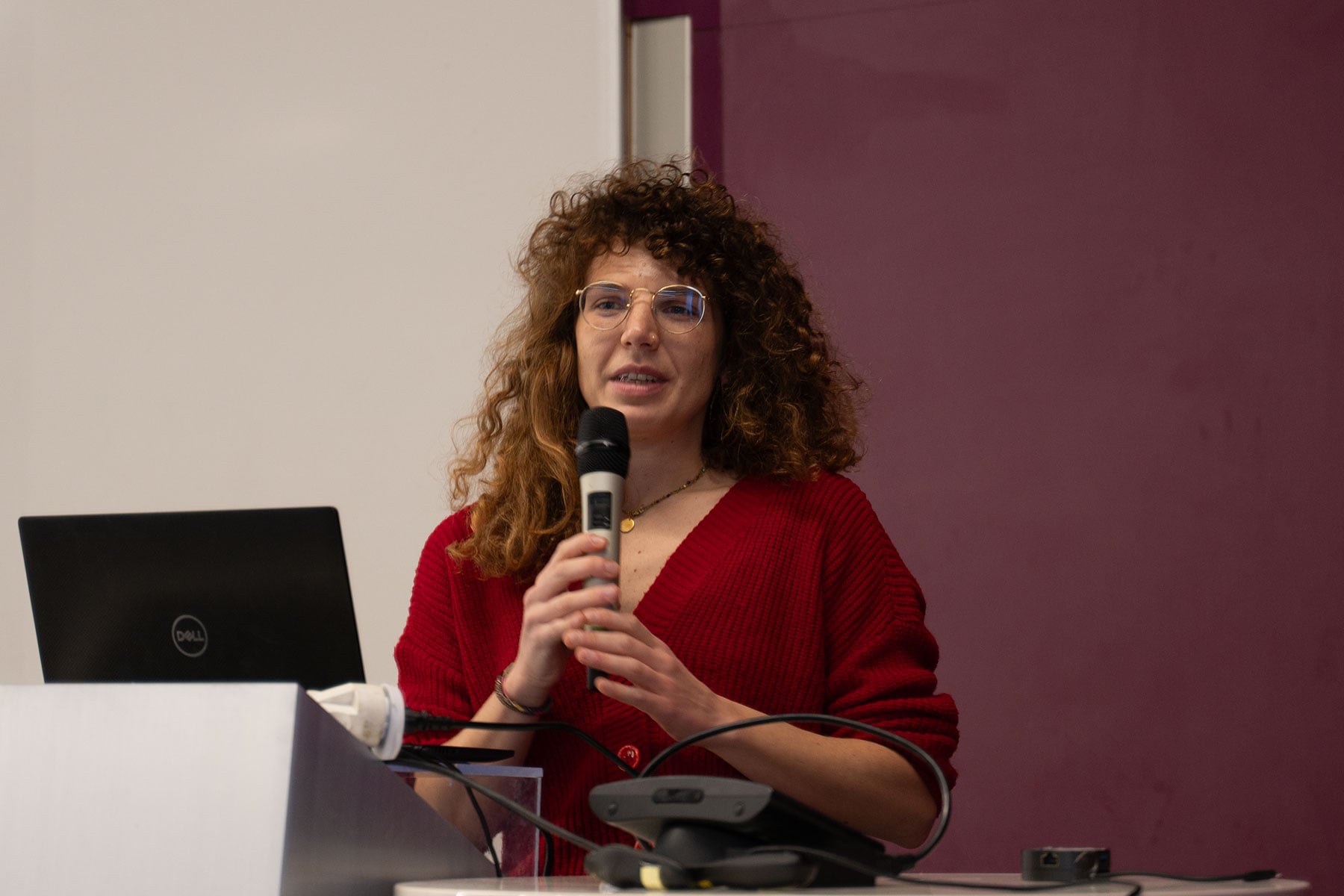
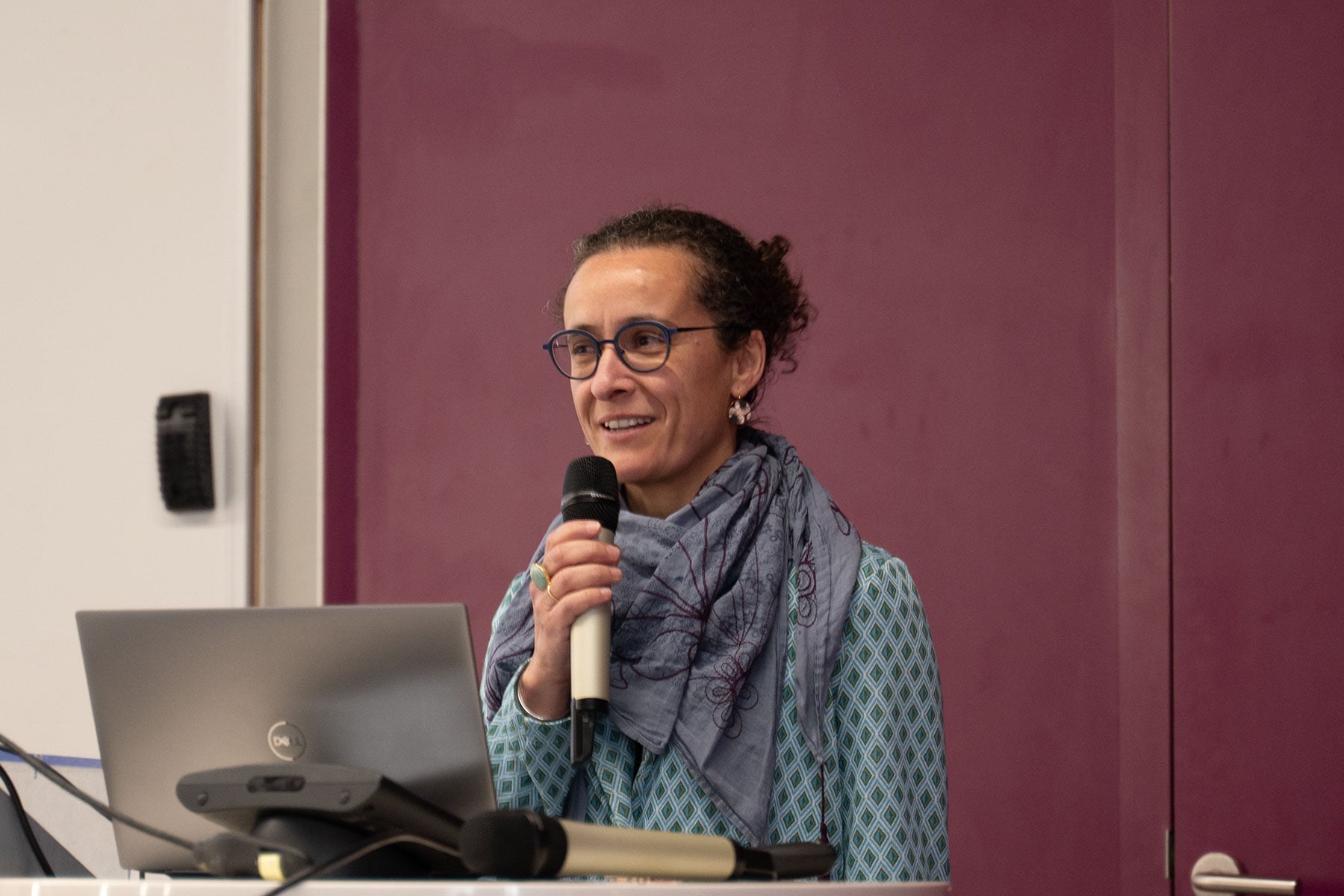
Beatrice Savoldi, researcher at Fondazione Bruno Kessler, Trento, Italy, and Christelle Jozet-Alves, professor at the University of Caen Normandy, were the scientific guests at this event. After their scientific presentations, the researchers shared lunch with a dozen students and young researchers.
She will present her research work at the Bordeaux Neurocampus Day on Wednesday 3 June 2026.
Ourania Semelidou
 Ourania Semelidou obtained her PhD in 2019 from the University of Crete in Heraklion, where she investigated the neuronal circuits involved in salience processing using 2 photon microscopy in drosophila. She then pursued this line of research during her first postdoctoral position in Athens, at the Alexander Fleming Biomedical Sciences Research Centre, extending her work to neuropsychiatric contexts. In 2020, she joined our department and more specifically the Neurocentre Magendie for a second postdoctoral position, where she works to understand how sensory information drives perceptual decision-making in the context of autism spectrum disorder in mouse models.
Over more than a decade of innovative and impactful research, her work has led to ten scientific publications, including six as first author and three as corresponding author, reflecting both her productivity and her growing scientific independence.
Her scientific excellence has been widely recognised both nationally and internationally. Notably, she was awarded a fellowship from the Fondation pour la Recherche Médicale and a NARSAD Young Investigator Grant. She also regularly serves as a peer reviewer for international scientific journals.
Beyond her scientific achievements, Ourania Semelidou has demonstrated a strong and sustained commitment to the scientific community. She has been actively involved in teaching and mentoring, supervising undergraduate and master’s students, and participating in advanced training programmes such as the Cajal Training Programme at the Bordeaux School for Neurosciences. She has also contributed to the organisation of multiple international scientific events, including a Gordon Research Seminar.
Her engagement extends further to the promotion of diversity, equity, and science outreach. In fact, she is one of the founding member of the Diversity, Equity and Inclusion committee of Magendie, and she contributes to science popularisation initiatives for high school students through programmes such as Déclics and Tipping Point.
In conclusion, for her scientific excellence, her dedication to the community, and her commitment to sharing science beyond the laboratory, it is a great pleasure for the NeuroPIC committee and Bordeaux Neurocampus to award her the Marian Diamond Prize.
About the Prize
Created in 2023 on the initiative of the Neurocampus Committee for Parity and Inclusion (NeuroPIC), the Marian Diamond Award aims to highlight women neuroscientists at a crucial stage in their careers, the postdoctoral period, when they face numerous obstacles to accessing academic positions.
Marian Diamond (1926-2017) was a revolutionary American neuroscientist who was the first to demonstrate anatomical neuroplasticity and advance research on neurons and glial cells through her study of Einstein’s brain.
This award is presented on International Day of Women and Girls in Science, which takes place every year on February 11.
The award includes a personal prize of €1,000 funded by Bordeaux Neurocampus and a research prize of €2,000 funded by the CNRS (QVCT call for projects obtained by NeuroPIC).
Last update 06/02/26