

Venue : Centre Broca
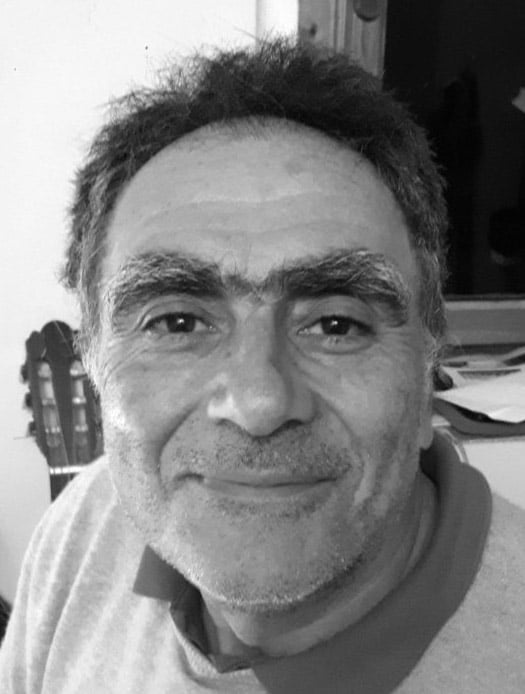 Gian Michele Ratto
Istituto di Biofisica CNR, Pisa, Italy
Invited by Tommaso Garavaldi (Team Marsicano, Neurocentre Magendie)
Title
The mutable landscape of intracellular Chloride in pyramidal neurons modulates inhibition and neuronal processing in the mouse visual cortex.
Abstract
Chloride is the main anion in living cells and it does not only ensures electroneutrality, but it also plays a crucial role in several cellular functions such as volume control, cell proliferation, and migration. In neurons, Cl– currents through the γ-aminobutyric acid receptor A (GABAA) provide fast synaptic inhibition essential for network stability and spike synchronisation. The Cl– gradient regulates the strength of inhibitory currents and thus of the excitation-inhibition dynamic balance. The complexity of Cl– signalling is underlined by recent studies from us and others (Pracucci et al 2023, Alfonsa et al. 2023) that have demonstrated that [Cl–]i in pyramidal neurons follows a daily rhythm in the mouse cortex. By means of 2-photon imaging, we demonstrated that [Cl–]i reaches the peak during the active phase (at night) and the nadir during the resting period (day), with a shift of concentration of about 9 mM. This time-of-day dependent modulation of [Cl–]i influences the excitation-inhibition balance, with remarkable effects on neuronal synchronisation during visual processing and seizure susceptibility. Recordings with high density electrode arrays suggest that at midday the low [Cl–]ᵢ supports hyperpolarizing inhibition and high neuronal synchrony, whereas at night the elevated [Cl–]ᵢ leads to shunting inhibition and increased network entropy.
The discovery of this daily oscillation shakes the assumption that Cl– level is constant in healthy adult neurons and it suggests a previously ususpected temporal plasticity of [Cl–]i and thus of inhibition. The temporal evolution of [Cl–]i is due to the balance of import and export mediated by cotransporters that determines baseline [Cl–]i, and on transient Cl– fluxes through the GABAA receptors. Thus, the time course of Cl– transients during cortical processing holds clues on the operation of synaptic inhibition. By means of a novel genetically encoded sensor for Cl–, we have found a complex repertoire of [Cl–]i dynamics under physiological conditions in the primary visual cortex. Here, intracellular Cl– is modulated not only by visual activity but also by changes in brain state and locomotion.
Overall these data indicates that [Cl–]i is continously regulated on both short term (seconds to minutes) and long term (hours) temporal scales revealing an additional layer of complexity of neuronal function.
Pracucci et al. Nature Commun. 2023. doi: 10.1038/s41467-023-42711-7
Alfonsa et al. Nature Neurosci. 2023. doi: 10.1038/s41593-022-01214-2
References
- Simultaneous two-photon imaging of intracellular chloride concentration and pH in mouse pyramidal neurons in vivo. Sulis Sato S, Artoni P, Landi S, Cozzolino O, Parra R, Pracucci E, Trovato F, Szczurkowska J, Luin S, Arosio D, Beltram F, Cancedda L, Kaila K, Ratto GM.
Proc Natl Acad Sci U S A. 2017. doi: 10.1073/pnas.1702861114. - Modelling genetic mosaicism of neurodevelopmental disorders in vivo by a Cre-amplifying fluorescent reporter. Trovato F, Parra R, Pracucci E, Landi S, Cozzolino O, Nardi G, Cruciani F, Pillai V, Mosti L, Cwetsch AW, Cancedda L, Gritti L, Sala C, Verpelli C, Maset A, Lodovichi C, Ratto GM.
Nat Commun. 2020 Dec 3;11(1):6194. doi: 10.1038/s41467-020-19864-w. - Altered Cl- homeostasis hinders forebrain GABAergic interneuron migration in a mouse model of intellectual disability. Maset A, Galla L, Francia S, Cozzolino O, Capasso P, Goisis RC, Losi G, Lombardo A, Ratto GM, Lodovichi C.
Proc Natl Acad Sci USA 2021 Jan 12;118(2):e2016034118. doi: 10.1073/pnas.2016034118. - Genetically encoded sensors for Chloride concentration. Lodovichi C, Ratto GM, Trevelyan AJ, Arosio D.
J Neurosci Methods. 2022 Feb 15;368:109455. doi: 10.1016/j.jneumeth.2021.109455. Epub 2021 Dec 22. Review. - Daily rhythm in cortical chloride homeostasis underpins functional changes in visual cortex excitability. Pracucci E, Graham RT, Alberio L, Nardi G, Cozzolino O, Pillai V, Pasquini G, Saieva L, Walsh D, Landi S, Zhang J, Trevelyan AJ, Ratto GM.
Nat Commun. 2023 Nov 4;14(1):7108. doi: 10.1038/s41467-023-42711-7. - Lodovichi C, Ratto GM. Control of circadian rhythm on cortical excitability and synaptic plasticity.
Front Neural Circuits. 2023 Mar 30;17:1099598. doi: 10.3389/fncir.2023.1099598. PMID: 37063387; PMCID: PMC10098176. - Intrinsic cell-class-specific modulation of intracellular chloride levels and inhibitory function, in cortical networks, between day and night. Alberio L, Marshall A, Graham RT, MacKenzie-Gray Scott C, Saieva L, Gartside SE, Ratto GM, Trevelyan AJ.
E-Neuro, 2025, in press.