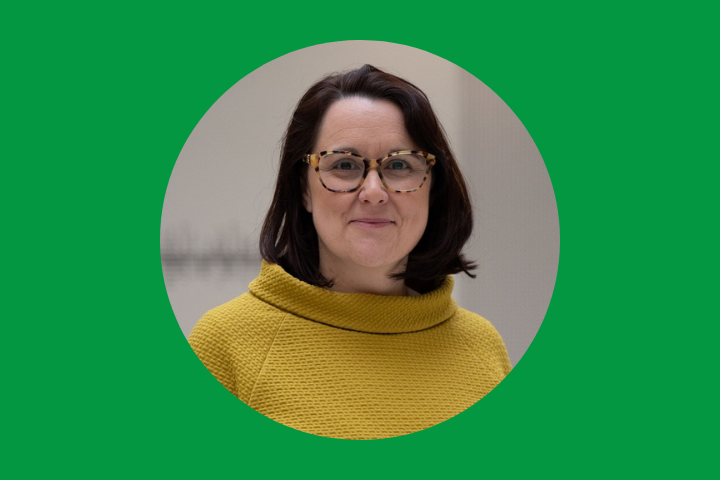
Anne-Sophie Hafner: new team leader at IINS
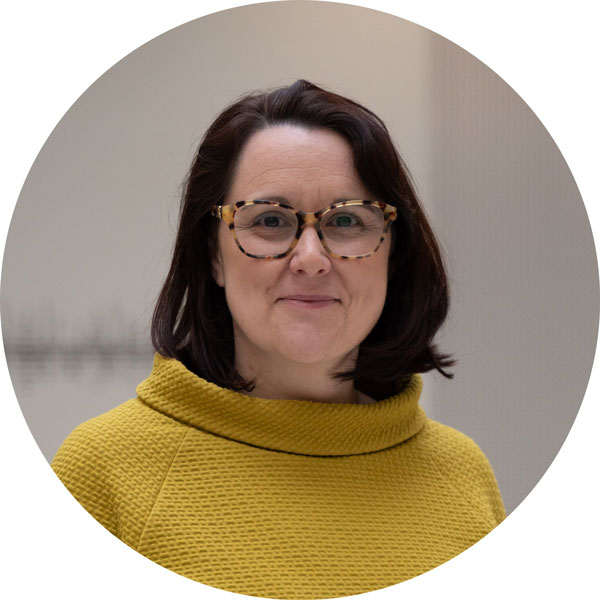
Recruited as Chaire Professeur Junior (CPJ) by the university of Bordeaux, Anne-Sophie Hafner joined IINS in April 2026 as leader of the new team “Molecular Dynamics of the Synapse”.
 Could you present your career path?
Anne-Sophie Hafner: First of all, I grew up in a village close to Coulommiers in Seine et Marne and I was the first in my family to pursue studying at a university! So, I moved to Paris, and there I first obtained a Bachelor degree in human biology and then a Master degree with a specialization in neuroscience. During all this time, I was working about 20 hours per week on the side: first as a secretary, then as a cashier, and finally at McDonalds.
I moved to Bordeaux for my PhD at IINS in the team of Daniel Choquet, who was my supervisor. I had an amazing time! I was given a lot of freedom which was priceless for my scientific development. After a very productive PhD, I joined the Max Planck Institute for Brain Research in Frankfurt, Germany, for my Postdoc. Within a year while setting-up my new project I had some novel observations that led me several years later to publish in Science.
I met my husband in Frankfurt and since he is also in academia, I restricted my next job search to central Europe. This was a risky move and as covid-19 pandemic shadowed the world, I ended up having to take a staff scientist position at the EMBL (European Molecular Biology Laboratory) in Heidelberg, Germany, where I was recruited to set up a local transcriptomic imaging facility. Thankfully, soon after I started, I got an offer for a research group leader and assistant professor position at the Donders Institute in the Netherlands. Thus, I moved again and shortly after I was awarded an ERC Starting Grant which was key to kicking off my research! Five years later, I am moving back to Bordeaux. It is not because I didn’t like my time in the Netherlands, but because it was difficult to manage my personal life. In the meantime, I had two beautiful children and my husband is still working in Germany. Coming to Bordeaux is both a personal and professional choice. The infrastructure and the topics studied by the many research teams in Neurocampus make it a really good place for my research.
You have been awarded two ERC grants — one on the mechanisms of memory storage and the other on gene therapy for Alzheimer’s disease. These topics are at the heart of current neuroscience research. What led you to focus on these areas in particular?
I am thrilled to welcome Anne-Sophie, an amazing young researcher with a stellar trajectory, in our institute. She will be a considerable asset for our scientific community, bringing new expertise!
Words of Laurent Groc, IINS director.
I have been fascinated about memory storage and started working on this subject during my PhD, trying to understand how memory is stored at the molecular level. In the team I worked with at IINS, we studied proteins located at the post-synaptic side, which is the side that receives signals. When I moved to Germany for my Postdoc, I wanted to understand how proteins make it to the synapse and tried to understand the molecules which produced the proteins – the messenger RNA- and whether there were additional regulations at this level. While setting up a new technique, I had this observation: I could actually see messenger RNA on the other side of the synapse, on the pre-synaptic side! At that time, it was highly debated whether pre-synapses could produce their own proteins locally. Overall, my aim has always been trying to understand how from some molecules that “live” for only a couple of hours or days, human brains can store information for multiple months, years and decades. For me, it is one of the biggest mysteries of neuroscience!
I think that science is also a lot about human connection. In fact, my work on Alzheimer’s disease really started thanks to Akshay Kapadia, the first Postdoc I hired in the Netherlands. During his PhD, he worked on Alzheimer’s disease. When starting in my lab, he asked to work on a small side project on the disease. I have always been interested in this topic but I would have never initiated a project alone. I told him: “Fine. However, I want us to focus on the physiological roles of the proteins involved in the disease (APP and its proteolytic products)”. Surprisingly, we have identified a new toxic pathway that could be responsible for the development for the disease and we are starting to test a gene therapy to block Alzheimer’s disease at an early stage.
Understanding memory will be at the heart of your research at the IINS?
Mostly. Firstly, we will focus on ‘infantile amnesia’, whereby many memories formed during early childhood are lost in adulthood. The hypothesis is that the high levels of synaptic plasticity and neurogenesis observed in early childhood may destabilise infants’ memories. In order to gain a comprehensive understanding of the emergence of time-resistant episodic memory in animals, we aim to characterise the proteome and transcriptome of synapses during and after the period of infantile amnesia.
We also want to understand the molecular traces of memory. At the cellular and network levels, it is not yet fully understood how memories are retained over long periods of time. The “synaptic trace theory of memory” describes that as information flows through neural networks in the brain, the activity of neurons modifies the protein composition of individual synaptic connections such that previous activity patterns are somewhat retained inside the circuit. These activity-induced changes in the pattern of synaptic connections, a combination of structural and functional plasticity mechanisms, are believed to underlie the long-term storage of information. According to this theory, the stability of memory is directly linked to the stability of synaptic connections recruited during the initial experience. But this theory has been recently challenged by accumulating evidence of the highly dynamic nature of synapses. I propose that presynaptic remodeling induced by synaptic plasticity creates stable presynaptic structures in a local protein synthesis dependent fashion. These stable boutons are attractors of newly formed spines such that long-lasting boutons remain connected to postsynaptic target-neuron through long periods. We use a combination of live- and super-resolution imaging techniques to investigate presynaptic function and plasticity.
Finally, we will not limit ourselves to memory disorders, as we will be examining the molecular mechanisms underlying synaptopathies – neurological disorders resulting from dysfunction at the synapses. A central molecular mechanism implicated in many synaptopathies is the disruption of the excitatory (glutamatergic) to inhibitory (GABAergic) transmission balance (E/I balance). This imbalance can lead to hyperexcitability or hypoactivity within neural circuits, contributing to cognitive deficits, seizures, or behavioral abnormalities observed in disorders like autism spectrum disorder (ASD), schizophrenia, epilepsy and in Alzheimer’s disease (AD).
The scientific world is demanding, perhaps even more so for women. How do you find your place in this still very male-dominated field?
It is not easy every day! It is challenging to be a female and a young group leader. Some people tried to discourage me from becoming a team leader and aiming higher in my career. I think the reason why there are less women team leader is that they were led to believe they are not capable and that their goal was not achievable. Many strange things were said to me over the years, like “being a group leader is very difficult, you have a family, you should focus on your kids”. Out of curiosity, I asked one of my friends -a talented male young group leader- if something similar has ever been said to him since he also has a kid. He replied in surprise with a big no! I think as women it is very important to show that it is not acceptable not to treat us correctly. If someone says something inappropriate or even insulting, you have to call them out on it EVERY time and don’t accept paternalism: you know best what’s good for you!
At the same time, I was also very lucky because my Postdoc supervisor told me I was capable of achieving my goals -and I am so thankful she did. Hold on to people who believe in you!
It is important to me to be a role model for the new generation, particularly for young women and for people who don’t know the academic system. In fact, I always try to know my students and if necessary guide them through the academic system -because for me it was a bit challenging. I also want to show young men and women that female scientists can be excellent scientists, and still be caring and respected at the same time.
We often hear that being a researcher is a vocation. How do you balance your professional and personal life?
Being a researcher was for me a vocation. Since I was ten years old, I wanted to be researcher even if I didn’t truly grasp what it meant! I wanted to understand how life works and I thought: “this may be the job of a researcher”.
Balancing my professional and personal life is not always easy. My husband is also in academia and we talk about science at the dinner table! I actually had one very good idea for a study debriefing with my husband for hours on a long drive towards our holiday destination. My professional life is part of my life 24/7. I work a lot but my job also gives me flexibility, which I use as much as I can. My kids see their parents very passionate about their work, which is I think very precious! I have to say nothing would be possible without my fantastic husband and my amazing mother. They are my first supporters and, without them, raising two kids while moving my career forward would be simply impossible. So, my advice for young people: surround yourself well!
Comments collected by Amélie Di Bella
Last update 24/06/26